

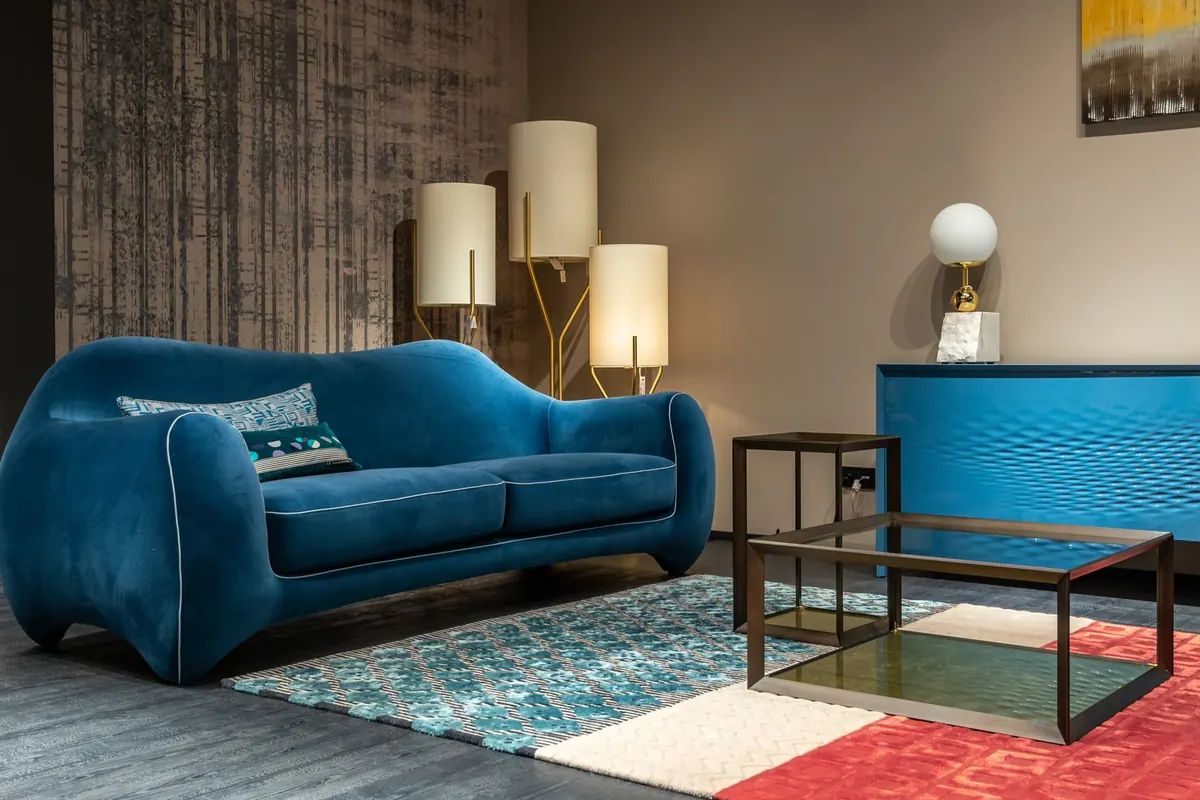
A living room with one ceiling light is a room with one mood. At four in the afternoon it looks fine. At nine in the evening, with the overhead fixture blazing and the television flickering, everyone squints a little and no one quite settles in. The problem is not the fixture. It is that a single light source is being asked to do three jobs at once: fill the room, light whatever you happen to be holding, and make the space feel like somewhere you want to stay.
Layering separates those jobs. Instead of one bright source doing everything badly, you build a small network of lights at different heights, aimed in different directions, controlled separately. The version that works in almost any living room comes down to five fixtures.
Why One Overhead Light Flattens a Room
Ceiling light falls from above, so it lights the floor and the tops of heads while leaving walls, corners, and faces in shadow. It also puts the brightest thing in the room at the edge of your vision, which is why it feels harsh even when it is not especially bright. And because it is one switch, you get two options: everything on, or everything off. There is nothing to turn down when the conversation slows and someone suggests a film.
Lamps solve this by putting light where you can see it and control it. Warm light at eye level or below, with the bulb hidden behind a shade, reads as cozy because it mimics firelight and candlelight — sources low in the room, close to people. That instinct is worth designing around.
The 5-Light Formula
The formula is one ambient source, two task lights, and two accent lights. That is five switches, five points of light, and enough variety that you can go from bright and social to dim and quiet without ever touching the ceiling fixture.
- One ambient light. A dimmable ceiling fixture, a pair of matched table lamps on a console, or a floor lamp that throws light up at the ceiling.
- Two task lights. Usually a reading lamp beside the sofa and a second one near an armchair or desk corner, each positioned so the shade sits roughly at seated eye level.
- Two accent lights. A picture light, a slim lamp on a bookshelf, a plug-in wall sconce flanking a mirror, or a small lamp on a side table that exists purely to glow.
Five is a starting point, not a rule. A long room may want two ambient points and three tasks. A small one can do the job with four. What matters is that the sources sit at different heights and point in different directions.
Layer One: Ambient Light Sets the Baseline
Ambient light is the wash that keeps the room from feeling like a cave. The best versions bounce off surfaces instead of hitting you directly. A floor lamp with an upward-facing shade, a pair of lamps on a sideboard, or a ceiling fixture on a dimmer all qualify.
If you keep the overhead fixture, treat it as background rather than the main event. Put it on a dimmer, use warm bulbs, and consider adding a shade or diffuser so the glare softens. If you never use it, that tells you something: the room has already told you what it wants.
Get the ambient level right first
Turn on only the ambient layer at night and stand in the doorway. You should be able to walk safely and read a large headline, but the room should feel slightly underlit. That is the correct starting point. Everything else is added for a reason, not just for brightness.
Layer Two: Task Light Where You Actually Sit
Task lighting is the layer people skip, then complain about. It is the lamp that actually lets you read a paperback for an hour without eye strain, and it should be positioned so the light falls on the page, not into your face.
A few practical rules that hold up in real rooms:
- Place the lamp beside your shoulder, not directly behind or in front of you.
- Check that the bottom edge of the shade sits around eye level when you are seated, so you never see the bulb.
- Use an opaque shade and a bulb bright enough to reach the page — a dim reading lamp is a decoration, not a task light.
- Angle adjustable floor lamps toward the page or the chair back, never across the room at the television.
For TV watching, the goal is the opposite of a dark room. A small pool of light behind or beside the screen softens the contrast between the bright image and the dark wall, which makes viewing easier on the eyes. A lamp on a low setting does this quietly and well.
Layer Three: Accent Light Adds the Depth
Accent lighting exists to give the eye interesting places to land. It highlights texture, plants, artwork, a stack of books, the corner of a mantel. It is also the layer that makes a room look designed rather than furnished.
Think low and small. A lamp on a shelf turned toward the wall throws a soft scallop of light and makes the wall itself a feature. A picture light grazing a canvas flatters the surface. A pair of sconces at shoulder height beside a doorway gives the room a second, gentler focal point and makes the space feel taller.
Keep accent light warm and dim. It should never compete with the task lamps. If you notice it as a light source rather than as a glow, it is too strong.
Bulbs, Dimmers, and a Few Details That Matter
Match the color temperature
Mix warm and cool bulbs in one room and the effect is instantly amateurish: one lamp looks yellow, the next looks blue-grey. Choose a single family, somewhere in the warm range, and use it throughout. Warm light is the default for living rooms for good reason.
Make sure your dimmer works with your bulbs
Dimmers and LED bulbs do not always cooperate. If a bulb hums, flickers, or drops out at low settings, it is usually a compatibility issue rather than a wiring fault. Buying dimmable bulbs and a dimmer rated for LED loads solves most of it. This is a small detail with a large effect on how the room feels after dark.
Hide the bulbs
Visible bulbs create glare, and glare is what makes a room feel harsh regardless of how warm the light is. Shades, diffusers, or careful aiming toward a wall will do more for atmosphere than any single purchase.
Putting It Together Tonight
You do not need to buy five new lamps this week. Start with what you have: turn on every light you own, then switch them off one at a time and notice which losses actually improve the room. Usually two or three sources turn out to be redundant, and one corner turns out to be empty.
Then build the sequence you want to live with. For entertaining, ambient plus both accents plus one task light gives you a bright but still flattering room. For reading, add the lamp nearest your chair and dim the rest. For TV, keep a low ambient glow and one accent, and turn everything else down.
Five lights, three jobs, one dimmer-friendly evening. That is the whole formula — and once the layers are in place, you will use the switch by the door far less than you expect.
Photo: Max Vakhtbovych / Pexels