



A room can have good bones and still feel cramped, and often the culprit is hanging right at the window. Curtains do more than block light. They set the visual proportions of a wall, which means the rod height, the panel width, and the hem length are quietly telling your eye how tall and how wide the room is.
Get those three things right and a modest bedroom or living room reads taller and more generous. Get them wrong and the same space looks pinched, boxy, and dark. None of the fixes below require new furniture or a renovation. Most take an afternoon, a drill, a tape measure, and a willingness to move a few brackets.
1. Mounting the Rod Just Above the Window Frame
Few choices shrink a room faster than a rod screwed into the trim, leaving a strip of bare wall above it. When the top of the curtain lines up with the top of the window, the eye reads the window as the full height of the wall. The ceiling feels lower than it is.
The fix is simple: raise the rod. A common guideline is 4 to 6 inches above the window frame, and higher still — within 2 to 4 inches of the ceiling or the bottom edge of the crown molding — when you want the room to feel taller. If your ceilings are low, going close to the ceiling is usually the better move. The panel then becomes a long vertical line from near the ceiling to the floor, and the window's actual top edge stops mattering.
Before drilling, check that the rod clears air vents, sconces, and tall furniture. A rod that grazes the top of a bookcase looks accidental.
2. Choosing a Rod That's Too Short
A rod that ends exactly at the window trim frames the glass tightly, like a picture in a too-small mat. Curtains also need somewhere to go when they are open. Without that extra length, the panels sit over the glass and cut off daylight in the middle of the day, which is the opposite of what a small room needs.
Extend the rod 3 to 6 inches beyond the frame on each side. In a small room, push further — 8 to 12 inches, or until the brackets sit close to the adjoining wall. This lets the panels stack clear of the glass and makes the window itself look wider than it is. The same logic applies to the rod's return to the wall: a bracket that brings the rod back toward the wall hides the side gap and stops light from leaking around the edges.
3. Using Panels That Are Too Narrow
Even with a generous rod, skimpy panels undo the effect. A flat, stretched curtain looks like a strip of fabric rather than a window treatment, and it makes the window feel undersized.
For a full, considered look, the total width of your panels should measure roughly 1.5 to 2 times the width of the rod. Here is a quick way to judge what you have:
- 1.5x: tailored and neat — a good fit for a small room or a casual fabric.
- 2x: classic fullness — the safest choice for most living rooms and bedrooms.
- 2.5x and up: heavily gathered and dramatic — better suited to large rooms and tall windows.
If your existing panels are too narrow, hang two per side on a wider rod rather than one, or add a sheer layer behind them for depth without extra weight.
4. Ending the Hem at the Wrong Height
The bottom of the curtain is where most rooms lose their nerve. A hem that stops at mid-calf, or hovers three inches off the floor, creates a hard horizontal line and makes the whole wall look short. Decide on one clean ending and measure for it:
- Floor length: the panel just touches the floor or floats half an inch above it. The most versatile option, and the one that makes rooms feel tallest.
- Slight break: an inch or two of fabric rests on the floor — relaxed, a little formal, and forgiving if your floors are uneven.
- Puddle: several inches pool on the floor. Dramatic in a large room, but it gathers dust and can look untidy in a tight one.
Sill-length curtains have their place — kitchens, bathrooms, above a radiator or a low bench — but they should stop just below the sill or at the apron, not somewhere in between.
5. Treating the Rod and Brackets as an Afterthought
Thin rods bow under heavy fabric, and a bowed rod leaves a visible gap at the top of the window. Match the hardware to the weight of the panels, and anchor the brackets into studs or proper wall anchors rather than drywall alone. Space brackets roughly every 30 to 36 inches so the rod stays straight across a wide span.
Two small details earn their keep. Level the rod before you commit; a rod even a quarter inch off is noticeable once the panels hang. And choose finials that add width rather than crowd the wall, especially if the rod runs close to a corner.
6. Forgetting Stack-Back Space
Stack-back is the width the panels take up when they are fully open. If each panel needs about 15 to 20 inches of rod when pushed aside, you need that much rod beyond the frame on each side. Otherwise the open curtains sit on the glass and the window never looks properly dressed.
Measure a panel's stacked width before you buy the rod. If you are short on space, a simple return, a discreet holdback, or a fabric with a bit of body will help the panels train to the sides instead of drifting back toward the center.
7. Letting Dark, Heavy Fabric Eat the Light
Floor-to-ceiling charcoal velvet is beautiful, and in a small room it can behave like a solid wall. Heavy, dark, or busy curtains absorb the light that makes a space feel open. That does not mean banning color. It means choosing fabric that relates to the wall: matching the wall tone, or going a shade lighter, creates a seamless vertical plane instead of a dark slab.
Linen, cotton blends, and lightly textured weaves hold a fold without bulk. Layer a sheer behind them if you want privacy by day without closing the room down.
A Simple Order of Operations
Work in this order and you will only drill once:
- Measure ceiling height, window width, and the stacked width of your panels.
- Set the rod height — near the ceiling where possible, or 4 to 6 inches above the frame.
- Add 3 to 6 inches beyond each side of the frame, plus stack-back.
- Check fullness: aim for 1.5 to 2 times the rod width.
- Order or hem to your chosen floor length.
- Anchor and level the brackets, hang the panels, then steam out the creases.
Give the fabric a day to settle before you judge it. Height, width, and one clean hem do most of the work, and a small room will tell you so right away.
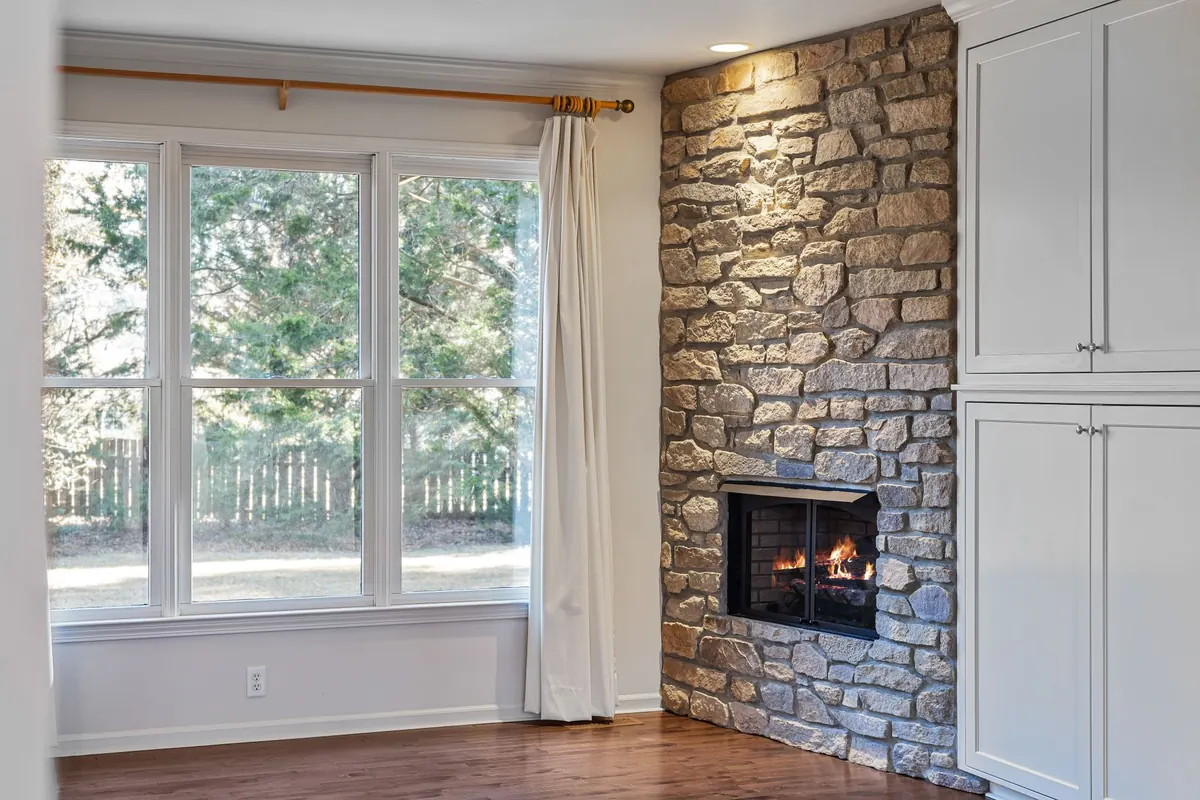
Photo: Curtis Adams / Pexels